How to pack a parcel
Check what can go, then pack so nothing moves inside the box. The rest is technique.
What you can't send
Two lists. One is refused at collection, the other travels with no compensation.
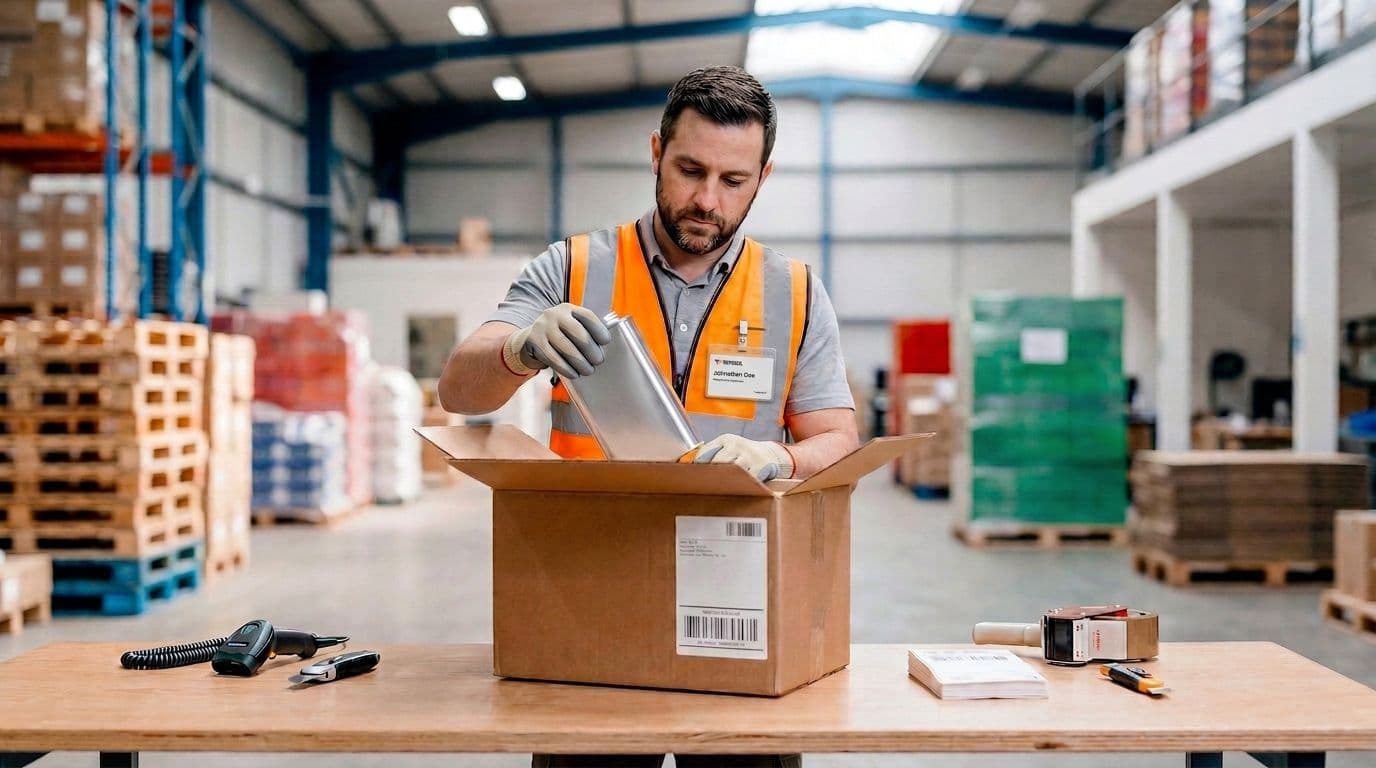
Refused outright
- Dangerous goods — explosives and munitions, anything holding petrol, oil, gas or fumes, fire extinguishers, lighter fluid, matches.
- Weapons and blades — firearms and knives, including replicas, imitations and blank-firing pistols.
- Drugs, alcohol, tobacco — medicines and prescriptions too, and biological samples.
- Money and identity — cash, credit and debit cards, cheques, SIM cards, passports and ID cards.
- Living and perishable — plants and seeds, human and animal remains, animal parts, livestock, insects, perishable food, any liquids.
- Bulky — white goods, car parts and engines, anything over our maximum dimensions.
Travels, but with no compensation
- Glass and glassware, mirrors, light bulbs
- Ceramics, porcelain, pottery, china, marble
- Antiques, artwork, fossils, stamps
- Precious metals and stones
- Foodstuffs and important documents
- Assembled furniture, screens over 37 inches
- Inks, toners, paint
These go at the risk of the sender: pack them as well as you can, but a claim for loss or damage will not be paid.
Restrictions also depend on the destination country. The full list is on the page of prohibited and restricted items — read it before you buy the box, not after you seal it.
What you need
Four things, bought before you start packing. Buying them mid-way is how corners get cut.

Box
A new one is better. Old boxes have lost strength: dented corners, softer cardboard.
If you reuse your own, check the corners and the walls. Strip or cover every old label and barcode. The courier scans the first barcode it sees, and the parcel leaves for the wrong address.
Single-wall cardboard is enough for light, soft things. Books, dishes, a laptop, anything over 10 kg: double-wall. Heavy and valuable: triple-wall or a wooden crate.
Cushioning
Bubble wrap, foam, packing peanuts, crumpled kraft paper. Bubble wrap is sold by the metre in any hardware store.
Newspaper and carrier bags don't count. Newspaper flattens after the first handling, bags fill the space without absorbing anything.
Tape
Packing tape, 48 mm wide. Office tape won't hold and comes off in the cold. Reckon on about 3 metres per box.
No string, twine or masking tape: they catch in sorting machines, and the parcel comes back.
Two printed labels
One goes on the outside, the second inside the box. If the outer label tears off or gets soaked, the parcel is identified by the inner one.
For international shipments write the address in Latin letters.
Pack the box
Five centimetres of filler between the item and every wall. Filler, not air.
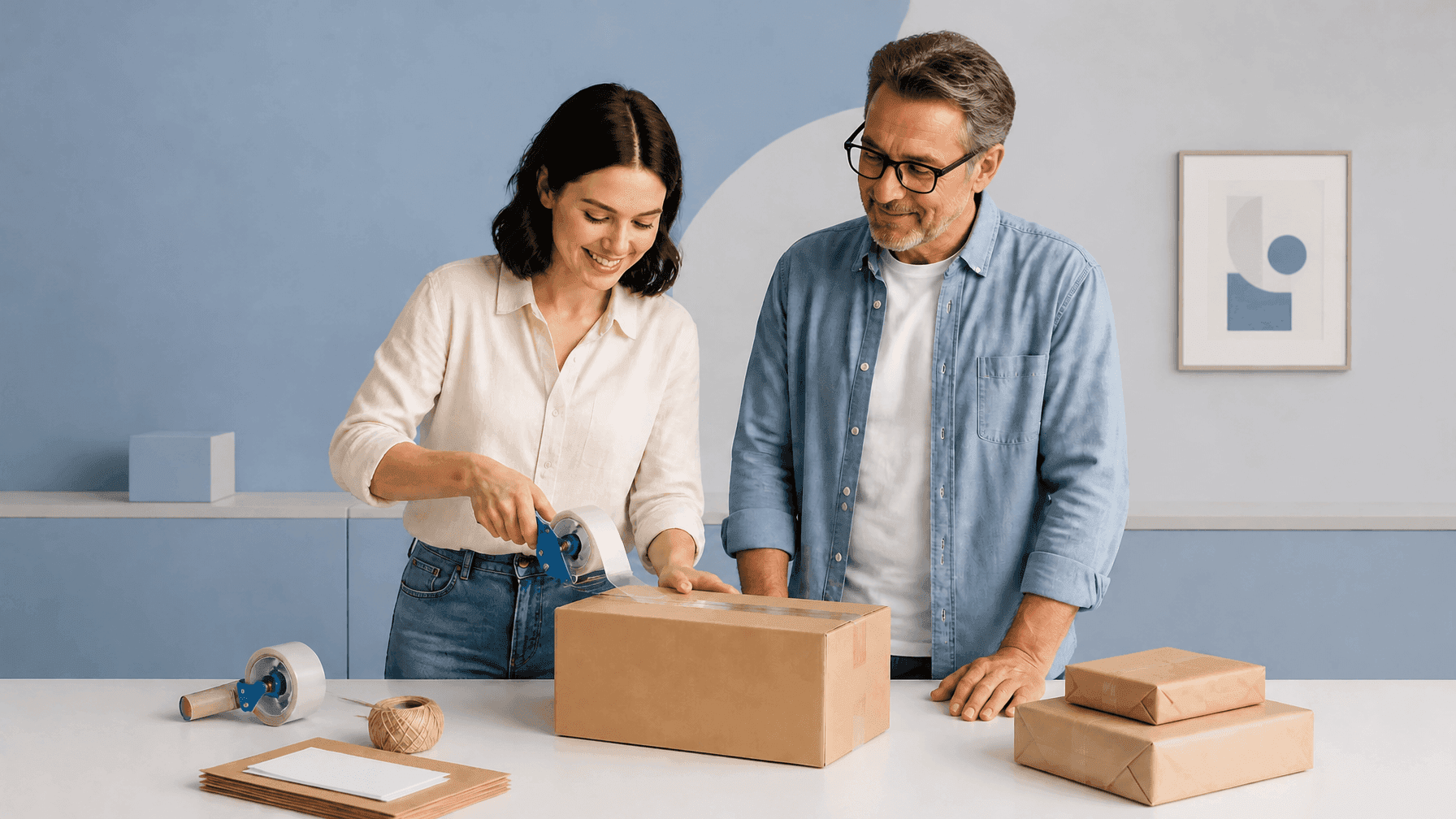
Seal the bottom first
Tape the empty box shut at the bottom, then fill it. Short flaps in, long flaps over the top, tape along the seam where they meet.
Tape in an H
One strip along the centre seam, one across each end seam, each running 5–7 cm down the sides. The finished pattern is the letter H. Top and bottom the same way. This is what carriers and warehouses use, and it is the seam that gives way first.
Wrap, then fill
Wrap every item separately, put it in the middle of the box and fill every gap around it. Parcels are not carried one at a time: yours travels under other boxes and gets dropped from the height of a conveyor.
Shake it
Close the box and shake it. If anything moves inside, add filler. Movement is what breaks things, not the drop itself.
Box in a box
Anything fragile, expensive or over 10 kg goes double. The wrapped item in a small box, that box in a larger one with 5 cm of filler all round.
Do not over-fill. A bulging box loses its corners, and the corners carry the weight of everything stacked on top.
Packing by item
Five groups, five different traps. Everything else packs like the closest of them.
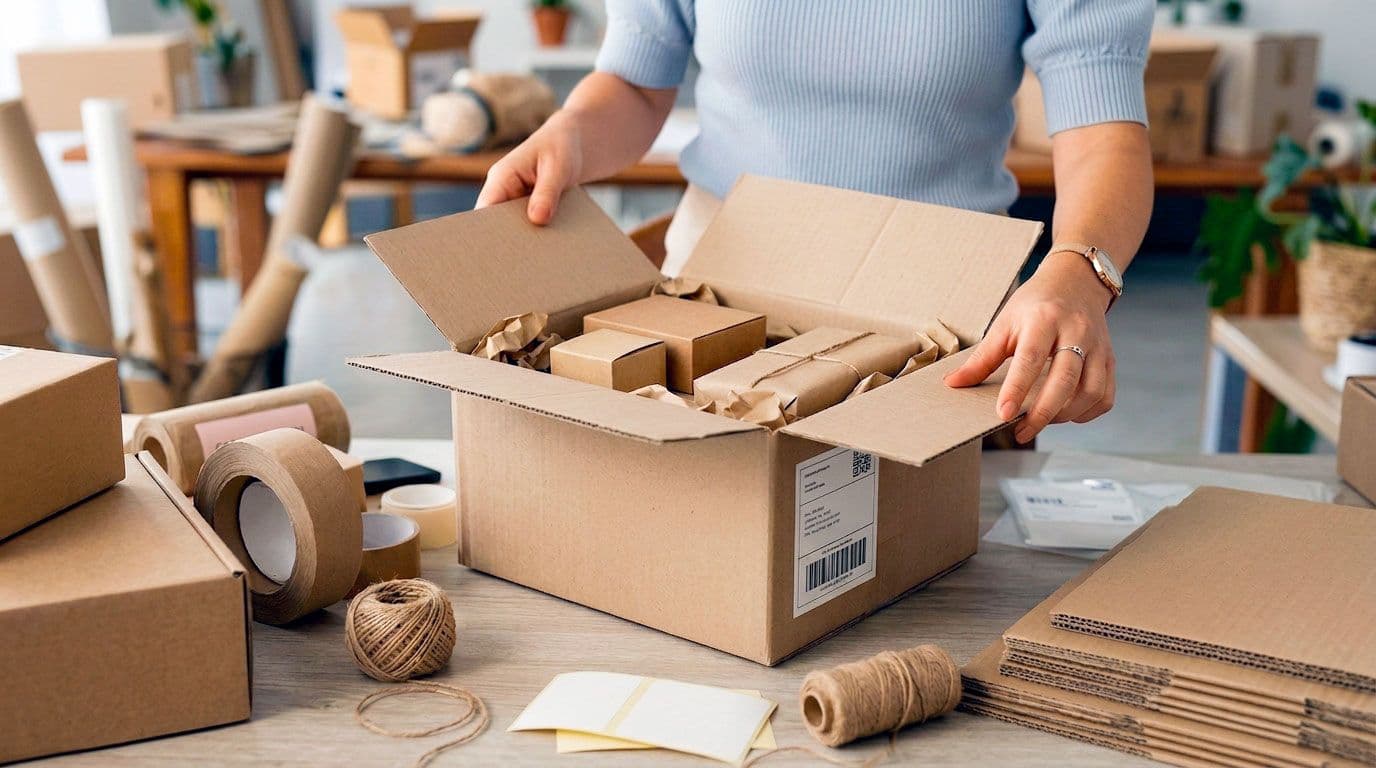
Glass, dishes, ceramics
These travel without compensation, so the packing is the only protection there is.
Wrap each piece separately, three layers of bubble wrap. Fill hollow items — vases, cups — with crumpled paper, otherwise the walls compress and crack.
Cardboard dividers between the pieces. Without them they knock against each other and break. Plates travel on edge, like records in a rack, not stacked flat.
Electronics
The original box from the shop is best. If you don't have it, wrap tightly in bubble wrap, several layers.
Boards and drives go in an anti-static bag first. Charger, cables and headphones in separate bags: loose cables lying against a screen scratch it.
All of that into a second, larger box. Fill the 5 cm gap with foam. Air pillows burst from the pressure changes of a flight.
Declare the real value. Understate it and customs may open the parcel and apply the maximum duty rate. Screens over 37 inches travel without compensation.
Clothes and shoes
T-shirts, jeans and hoodies can go in a thick plastic bag with sealed seams. Fur and leather only in a box, otherwise they crease and keep the creases.
Shoes in a box, a ball of paper inside each one to hold the shape.
Documents
Passports and ID cards cannot be sent at all. Other documents travel without compensation, so send a copy where a copy will do.
What does go: in a plastic wallet, the wallet between two sheets of stiff cardboard so the parcel cannot be bent.
Books and tools
Books in a stack, wrapped in film, in a double-wall box. Paper is heavy, and a single-wall box tears at the bottom.
Knives are not accepted. Screwdrivers, chisels and other sharp parts: cover the working end with cardboard, or they cut through the packing and the contents around them.
Before you hand it over
Two minutes here save a re-quote and a delay at the border.
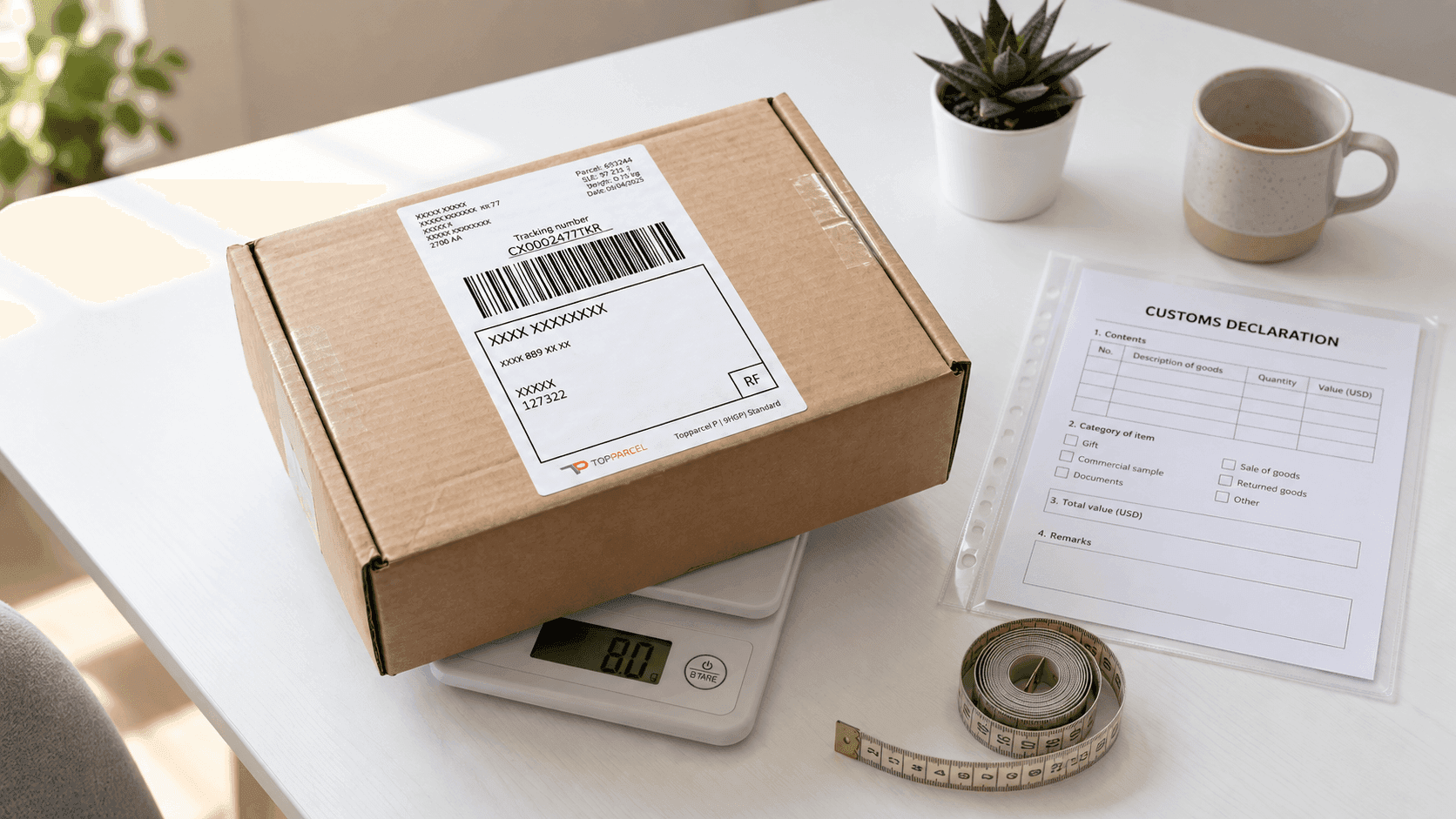
Measure and weigh the packed box
The price is calculated on the box you are sending, not on the item inside. Carriers charge on whichever is greater: the actual weight or the volumetric weight of the parcel. Measure and weigh after packing, then get a quote.
Customs documents on the outside
An international parcel travels with a customs declaration. Keep it in a clear pouch on the outside of the box so it can be read without opening the parcel. A declaration packed inside means the box is opened at the border.
Photograph the parcel
One photo of the packed, sealed box before you hand it over. If anything goes wrong, that photo is the evidence that it left you intact.
Insurance
Standard cover is limited, and extended cover is worth taking on anything expensive. It does not stretch to the no-compensation list above, and a claim for a badly packed parcel is refused whatever the cover.